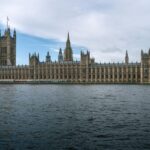


London’s FTSE 100 closed Friday down 208 points or 2.00%, finishing the week at 10,165 — its sharpest single-day fall in months. The slump was triggered by a toxic combination of fresh political instability, rising inflation expectations, and persistent fallout from the Iran war’s disruption of Middle East energy supplies.
Mining stocks led the rout. Airtel Africa fell 10.81%, Antofagasta lost 10.71%, and Fresnillo dropped 10.09%. Anglo American shed 6.3% and Endeavour 7.3%, while Glencore and Rio Tinto each lost more than 3.5%. Banking shares were also under heavy pressure: HSBC declined 2.5%, Lloyds and Barclays dropped more than 3%, and NatWest and Standard Chartered each lost over 1.5%.
Centrica’s £20m settlement
Among individual stories, Centrica slumped 7% after agreeing to pay £20 million to settle an Ofgem investigation into claims that British Gas had forced struggling customers onto prepayment meters. The episode is a reminder of the regulatory pressure facing the UK’s domestic energy retailers as cost-of-living scrutiny intensifies.
The trigger for the broader market sell-off, however, was political. Speculation that Greater Manchester Mayor Andy Burnham could mount a formal challenge to Sir Keir Starmer’s leadership rattled bond markets through the week. Sterling fell to a one-month low against the dollar, with the GBP/USD pair under sustained pressure as traders weighed the risk of a more fiscally expansive successor at Number 10.
“Markets fear” headlines return
Industry trade publication Estate Agent Today ran the headline “Markets fear as Andy Burnham bids to be Prime Minister” earlier in the week, reflecting how quickly Westminster volatility has reasserted itself in the City’s risk models. The 10-year gilt yield pushed above 5% — a level not seen since the worst of last year’s fiscal uncertainty.
Capital Economics has begun republishing its analysis of Starmer’s “potential replacements and what they might” mean for policy, signalling how seriously professional forecasters now take the leadership question. The firm noted in a recent update that “yesterday’s local elections could be historic as it could bring an end to Starmer’s tenure as Prime Minister.”
The stockpicker’s market returns
Friday’s session was not uniformly negative. AstraZeneca led the gainers, advancing 0.68% to 13,834p on turnover of 88,455 shares, leaving the pharma giant with a market capitalisation of £236.9bn. 3I Group rose 3.46% to 2,185p, while GSK, Shell, and Experian rounded out the top five performers.
The divergence underlines what fund managers have begun calling the return of the stockpicker’s market: with the index pulled in opposite directions by Middle East energy disruption, domestic political risk, and global AI-driven optimism on Wall Street, dispersion between winners and losers has widened sharply.
For UK retail investors, the immediate question is whether the political risk premium baked into Sterling and gilts persists into the coming week. Much depends on whether any leadership challenger formally declares — and whether the Prime Minister, against all current expectations, can yet steady the ship.